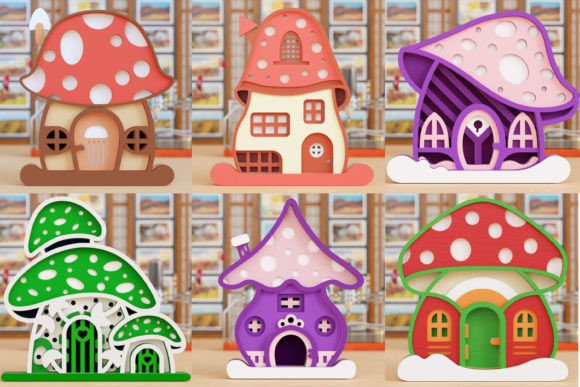
Evaluating the Mushroom House 3D SVG Laser Cut BUNDLE for Precision Crafting
For hobbyists and professional makers navigating the vast landscape of digital design files, selecting the right asset for a layered paper project requires more than just an appealing thumbnail. The Mushroom House 3D SVG Laser Cut BUNDLE represents a specific category of multi-format digital resources designed for depth and dimensionality. Unlike standard two-dimensional vector graphics intended for vinyl cutting or simple engraving, this bundle is engineered specifically for stacking techniques, where multiple layers of material are assembled to create a shadow-box effect. Understanding the distinct value proposition of this file type involves analyzing its format versatility, compatibility with various machinery, and the practical implications of its layering system compared to flat design alternatives.
Format Versatility and Machine Compatibility
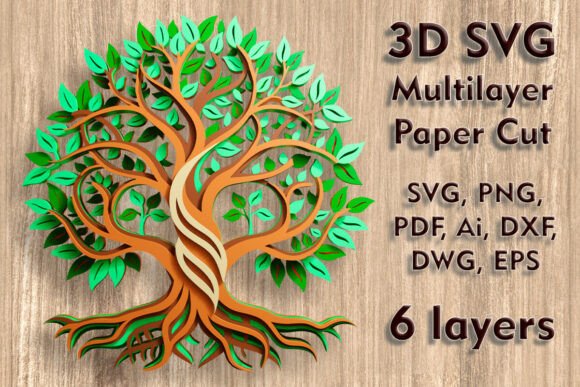
One of the primary decision factors when purchasing digital cut files is software and hardware compatibility. A significant advantage of the Mushroom House 3D SVG Laser Cut BUNDLE is its comprehensive inclusion of file types: AI, EPS, SVG, PNG, PDF, DXF, and DWG. This variety addresses a common pain point in the crafting community where a user might own a specific machine that prefers one format over another. For instance, users operating desktop die-cutting machines like Cricut or Silhouette often rely on SVG or DXF files for clean path recognition. Conversely, those utilizing industrial CO2 lasers or CNC routers may require DXF or DWG formats to ensure precise coordinate mapping without software interpretation errors.
When comparing this bundle to single-format downloads often found on lesser marketplaces, the inclusion of native Adobe Illustrator (AI) and Encapsulated PostScript (EPS) files offers a critical layer of editability. Professional designers often need to tweak node points, adjust kerf settings for specific material thicknesses, or modify the scale before cutting. Having access to the source vectors allows for these adjustments without the degradation of quality that can occur when converting between formats. While a PNG file included in the package serves well for preview purposes or sublimation projects, it is the vector files that define the utility of this bundle for serious fabrication.
The Mechanics of 3D Layering vs. Flat Design
The core distinction of this product lies in its three-dimensional architecture. Standard laser cut files typically produce a single plane of material, suitable for ornaments, keychains, or flat signage. The Mushroom House 3D SVG Laser Cut BUNDLE, however, is structured around a serial stacking methodology. The design is broken down into discrete layers, each representing a different depth plane of the mushroom house illustration. When these layers are cut from cardstock, wood veneer, or acrylic and stacked with spacers, they create parallax and depth.
This approach introduces specific tradeoffs that buyers must consider. On the benefit side, the visual impact is significantly higher. As noted in potential usages, these designs excel as backlit wall art where light passes through the varying depths, casting intricate shadows that a flat image cannot replicate. This makes the bundle particularly suitable for home decor applications where atmospheric lighting is desired. However, the assembly process is more labor-intensive. Unlike a "cut and weed" workflow associated with vinyl, 3D papercutting requires careful alignment, adhesive application between layers, and patience to ensure the structural integrity of the final piece. Users looking for a quick, five-minute craft project may find the assembly time prohibitive, whereas those seeking a meditative, high-result activity will find the process rewarding.
Commercial Viability and Licensing Considerations
For creators looking to monetize their crafting time, the licensing terms attached to digital assets are paramount. A notable feature of this specific bundle is the permission to sell the physical project. This distinguishes it from many "personal use only" files that restrict commercial application. If a maker intends to produce greeting cards, scrapbooking embellishments, or framed wall art for sale at local markets or online stores, this license provides the necessary legal framework.
However, it is crucial to differentiate between selling the physical object and the digital file. The standard industry practice, which applies here, prohibits the redistribution of the digital download itself. You cannot purchase the Mushroom House 3D SVG Laser Cut BUNDLE and then resell the ZIP archive or the individual SVG files to other crafters. This limitation protects the intellectual property of the original designer while still allowing the purchaser to leverage the design for physical goods manufacturing. When evaluating this against other resources, always verify if the commercial license includes unlimited production runs or if there are caps on the number of physical units sold, though this specific bundle generally favors open physical sales.
Practical Workflow and Assembly Requirements
Successfully executing a project from this bundle requires a systematic approach to file management and assembly. The workflow generally follows a logical progression: downloading the archive, extracting the specific file format compatible with your software, uploading it to your machine's interface, and executing the cut. The instruction to "stack the layers in the correct order as the serial" implies that the files are likely named or numbered sequentially (e.g., Layer_01, Layer_02). Maintaining this order during the cutting phase is essential; mixing up layers can result in a disjointed image where foreground elements appear behind background details.
Material selection plays a pivotal role in the final outcome. While the design is versatile enough for various mediums, the thickness of the material dictates the spacing needed between layers. For paper-based projects, standard cardstock (65-80 lb) is often ideal, providing enough rigidity to hold its shape without being too thick for intricate details. If using wood veneer or acrylic, the kerf (the width of material removed by the laser) becomes a critical variable. Users may need to adjust the vector lines slightly inward or outward depending on their machine's calibration to ensure tight fits or proper spacing. This level of customization highlights why having the editable AI or EPS files is superior to relying solely on pre-rendered SVGs.
Ideal Use Cases and Limitations
The Mushroom House 3D SVG Laser Cut BUNDLE is best suited for specific scenarios where aesthetic depth and tactile quality are priorities. It shines in the creation of high-end greeting cards, where the recipient experiences a pop-up effect upon opening, or in scrapbooking layouts that require a focal point with texture. Home decor enthusiasts will find it particularly effective for nursery art or whimsical living room accents, especially when paired with LED backlighting to emphasize the silhouette of the mushroom structure.
Conversely, this bundle may not be the optimal choice for large-scale production runs where speed is the primary metric, as the assembly time per unit is high. Additionally, if the end-user lacks the tools for precise layering—such as fine-tip tweezers, appropriate adhesives, or a steady hand—the final product may look messy rather than professional. Furthermore, while the design is charming, its whimsical nature may not fit every interior design style or occasion. A buyer looking for minimalist, geometric, or strictly typographic designs would need to explore alternative categories entirely.
Making an Informed Decision
Ultimately, choosing the Mushroom House 3D SVG Laser Cut BUNDLE comes down to aligning the file's capabilities with your project goals and technical comfort level. If you possess a laser cutter or die-cutting machine, enjoy the process of assembly, and seek a design that offers both commercial potential and decorative elegance, this bundle provides a robust foundation. The inclusion of multiple file formats reduces technical friction, and the layered design offers a visual payoff that flat vectors cannot match. However, if you prefer instant-gratification crafts or lack the patience for multi-step assembly, a simpler 2D design might serve your needs better. By weighing the tradeoffs between complexity and visual impact, crafters can determine if this specific resource fits their creative toolkit.